When a client comes to KINC for kiln erection, they're not just buying installation labour — they're buying the difference between a kiln that runs true for twenty years and one that fights you from day one. Our recent execution of a large-diameter, long-length rotary kiln system is a good example of what that looks like in practice, from shell fabrication through to a fully integrated exhaust and emission control circuit.
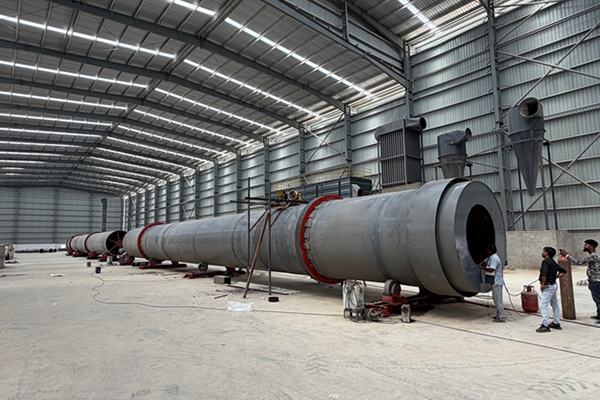
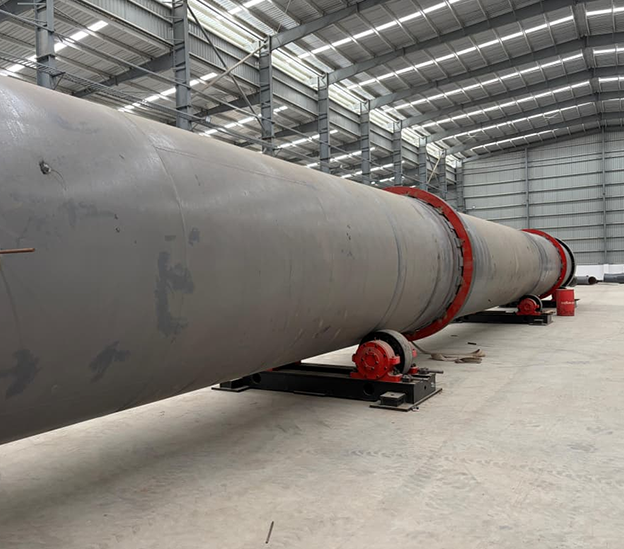
The core of the project was a 2500 mm diameter, 60-metre long rotary kiln, supported by a 24-metre rotary cooler, complete with:
This wasn't a single-equipment drop-in. It was a full process line, erected and tied together at the client's site.
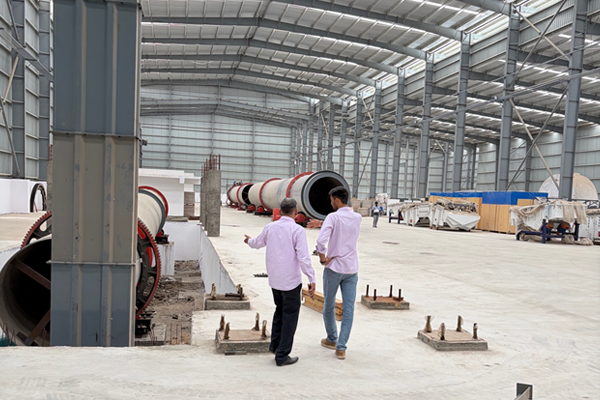
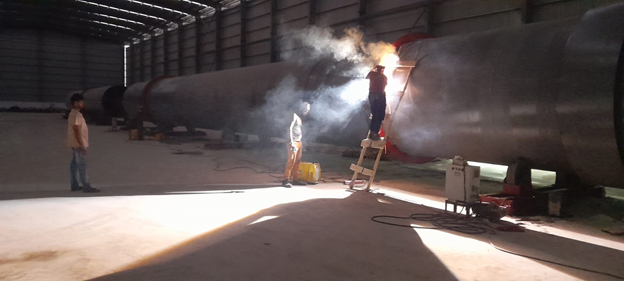
A kiln shell of this length doesn't arrive in one piece — ours came in six segments, which meant the single most technically demanding part of the job happened after the components reached site, not before.
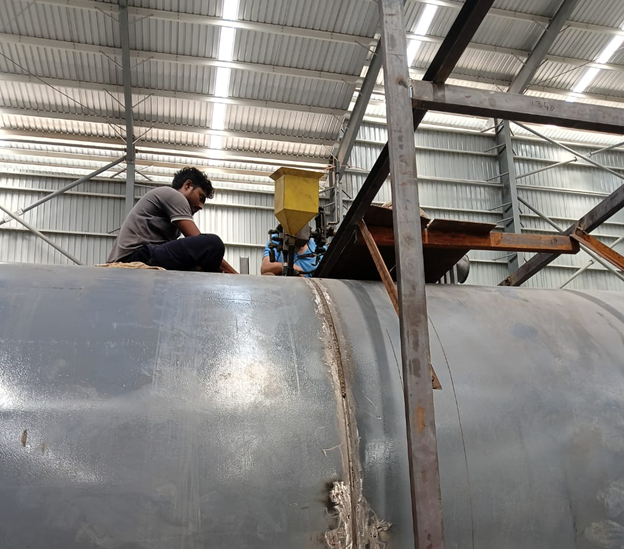
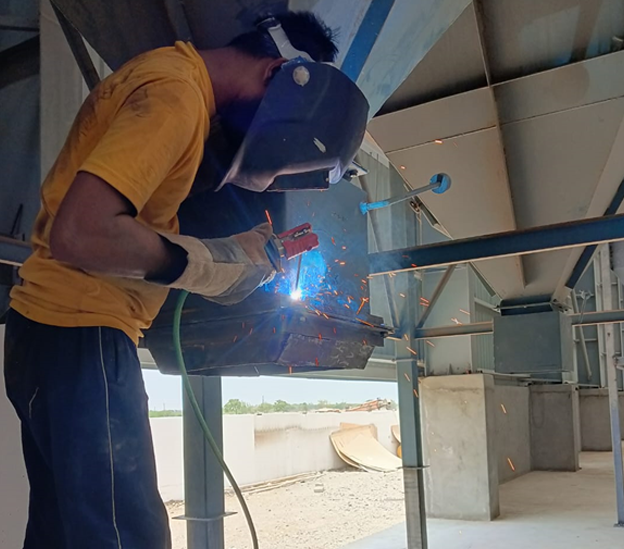
Each shell segment was joined using Submerged Arc Welding (SAW) performed on-site. SAW was the right call here for a few reasons: it gives a deep, consistent weld penetration across thick shell plate, produces a clean and repeatable seam with minimal spatter, and holds up to the qualification standards a rotating kiln shell demands — because a weak seam on a 60-metre rotating body under thermal and mechanical load isn't a defect you get to fix later.
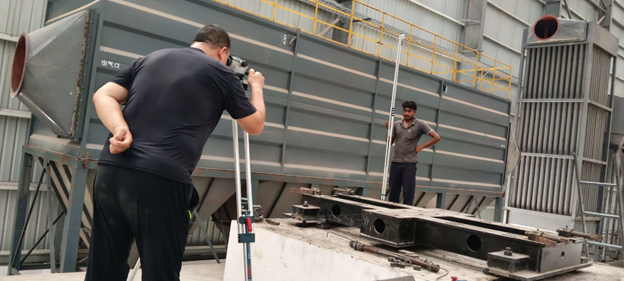
Beyond the welding itself, joining six segments into one continuous 60-metre shell means every joint has to respect the same centerline. Cumulative misalignment across six welds is the kind of thing that shows up later as shell ovality, uneven wear on riding rings, or vibration at running speed — so alignment control during joining was as critical as the weld quality itself.
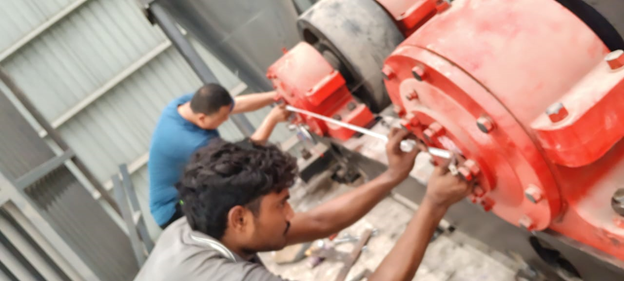
With the shell joined and erected, the rotary cooler — 24 metres of it — was installed and aligned to work in tandem with the kiln discharge, followed by the burner and firing system at the feed or discharge end depending on process flow.
On the material handling side, the feeding train — hopper, weight feeder, bucket elevator, and twin screw feeder — was erected and sequenced to deliver consistent, controlled material input into the kiln. Feed consistency has a direct bearing on kiln thermal stability, so this isn't an afterthought bolted on at the end; it's erected and commissioned as part of the same integrated system.
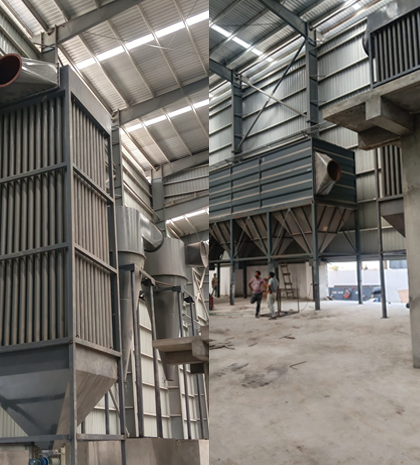
A kiln system is only as good as what happens to the gas leaving it. For this project, KINC executed the complete downstream gas handling circuit:
Erecting this as one continuous circuit — rather than as disconnected equipment — matters because draft balance across a kiln, cyclone, baghouse, scrubber, and fan is a system-level calculation, not a per-equipment one. Get the ducting, damper positions, or fan sizing wrong at any single point and the whole circuit underperforms.
Rotary kiln erection is often treated as the "easy part" after design and fabrication are done. In our experience, it's where a well-designed kiln either delivers on that design or doesn't. Shell alignment tolerances, weld integrity on site joints, and draft balance across the gas train are all things that get decided in the field — not in the drawing office.
This project is representative of KINC's approach to erection: full-scope execution — mechanical, thermal, and gas handling — treated as one integrated system, not a checklist of separately installed equipment.
Interested in what KINC's erection team can do for your next kiln or thermal processing project? Get in touch with us.
Copyright © 2026 KINC Mineral Technologies Pvt. Ltd. All rights are reserved
Designed and SEO Manage by ::